Play Therapy Isn’t Just for Little Kids: How Therapy Changes as Children Grow
When parents hear the words play therapy, they often picture a very young child sitting on the floor with toys.
And yes, play therapy can be incredibly powerful for young children.
But play based therapy does not suddenly stop being useful once a child gets older.
Instead, therapy tends to evolve with the child.
As children grow, the balance shifts. There may be more talking, more reflection, and more direct problem solving, but play, games, creative activities, sand tray work, movement, and other experiential tools can still be some of the best ways to help children express what they are feeling.
Because sometimes asking a child, “How do you feel about that?” gets you one answer:
“I don’t know.”
But asking them to show you with figures in a sand tray, choose a card that fits their week, build something, play a game, draw it out, or talk while doing an activity can open up an entirely different conversation.
Why Play Matters in Therapy
Children do not always process emotions the same way adults do.
Adults may be able to sit on a couch and explain what happened, how it made them feel, why they reacted the way they did, and what they think they need next.
Children are still developing those skills.
They may know that something feels bad without having the language to explain it.
They may show anxiety through stomachaches.
Anger through behavior.
Sadness through withdrawal.
Fear through irritability.
Stress through perfectionism.
Or they may simply say, “I’m fine,” because they truly do not know how to put the experience into words yet.
Play gives therapists another way into the child’s internal world.
For younger children especially, play is often their natural language.
What Does Play Therapy Look Like for Younger Children?
With younger children, therapy may rely much more heavily on play itself.
That can include:
Board games
Pretend play
Dolls or figures
Art
Puppets
Sensory activities
Sand tray work
Storytelling
Movement
Emotion identification activities
The goal is not simply to keep the child entertained.
The therapist is paying attention to themes, patterns, emotional expression, relationships, coping strategies, and the way the child responds to frustration, limits, connection, and problem solving.
A child may communicate far more through what happens in the playroom than they could explain in a traditional conversation.
Then Something Starts to Shift
As children move through elementary school, therapy often becomes a blend.
There is still play.
But now there may also be more talking.
A therapist might play a board game while asking about friendships.
Use cards or activities to talk about anxiety.
Work in the sand tray to explore family relationships.
Draw out what happens in the body during a panic response.
Practice coping skills through games.
Use stories or metaphors to make difficult concepts easier to understand.
The activity often helps lower the pressure.
Instead of sitting across from an adult and feeling like they are being interviewed, the child has something else to focus on while conversation happens naturally.
For some kids, that makes all the difference.
What About Tweens?
This is where parents sometimes assume traditional talk therapy should completely take over.
But tweens are in an interesting developmental space.
They are capable of deeper conversation and insight, but they are not adults.
They may be embarrassed talking directly about emotions.
They may be very aware that they are “in therapy.”
They may answer questions with one word.
They may want connection but resist anything that feels too vulnerable.
This is where blended therapy can be especially useful.
A therapist might use:
Board games
Card games
Sand tray
Art
Journaling
Would you rather questions
Emotion based games
Values activities
Problem solving tasks
Movement
Creative exercises
Conversation while doing something with their hands
The older the child gets, the more traditional talk therapy usually gets layered in.
But that does not mean the play disappears.
It becomes more intentional and developmentally matched.
And With Teens?
Teen therapy often looks much more like traditional talk therapy.
But even then, not every teenager wants to sit on a couch for 50 minutes and talk directly about their feelings.
Some teens open up more while playing a game.
Some talk more easily while drawing.
Some connect through music, writing, movement, or creative exercises.
Some benefit from sand tray work because it gives them a way to explore relationships or internal conflict without having to explain everything immediately.
The activity is not childish.
It is simply another therapeutic tool.
The goal is always the same:
Help the child or teen feel safe enough to express themselves, understand themselves, and build healthier ways of coping.
There Is No Magical Age Where Play Therapy Stops
Parents sometimes ask:
“What age is too old for play therapy?”
The answer is usually more nuanced than a number.
A four year old and a fourteen year old should not receive therapy in exactly the same way.
But both may benefit from experiential, creative, or play based interventions.
The difference is how those tools are used.
For a young child, play may be the primary form of communication.
For an elementary aged child, play and conversation may happen together.
For a tween, games or activities may create enough comfort for deeper conversations to emerge.
For a teen, talk therapy may be the foundation, with creative or experiential strategies added when they help the teen engage.
Good child therapy should grow with the child.
The Therapist Matters More Than the Toy
One of the most important parts of child therapy is having a clinician who understands child development.
A therapist needs to know not just what intervention to use, but when to use it.
A strategy that works beautifully for a six year old may feel insulting to a twelve year old.
A very verbal child may be ready for more direct conversation earlier.
Another child the same age may communicate much more effectively through art or play.
A neurodivergent child may need therapy adapted to sensory needs, communication style, interests, or emotional regulation differences.
A child who has experienced trauma may need a slower, more relational approach before they are ready for direct processing.
There is no single therapy formula that fits every child.
Child Therapy Should Be Developmentally Informed
At Heights Family Counseling, we have therapists who specialize in working with children at different stages of development and who are trained in the modalities that make the most sense for those ages.
That may include play based therapy for younger children.
A blend of play, games, sand tray, skill building, and conversation for elementary aged children and tweens.
More traditional talk therapy combined with creative and experiential techniques for older children and teens.
The goal is not to force a child into an adult model of therapy.
It is to meet them where they are developmentally and help them build the skills to express emotions more directly over time.
Sometimes the Best Conversations Happen While Doing Something Else
One of the things we often see in child therapy is that children talk when they stop feeling like they are being asked to talk.
A child may barely answer a direct question about school and then casually share something important three turns into a board game.
A tween may insist everything is fine and then create a sand tray that tells a very different story.
A teen may say very little during the first 10 minutes of a session and then open up while drawing or playing a simple game.
Connection often comes before disclosure.
Safety often comes before insight.
And expression does not always begin with words.
Helping Children Find Their Voice
The purpose of child therapy is not simply to get kids talking more.
It is to help them understand what they are experiencing, feel safe expressing it, build coping skills, and gradually develop the emotional language they will need as they grow.
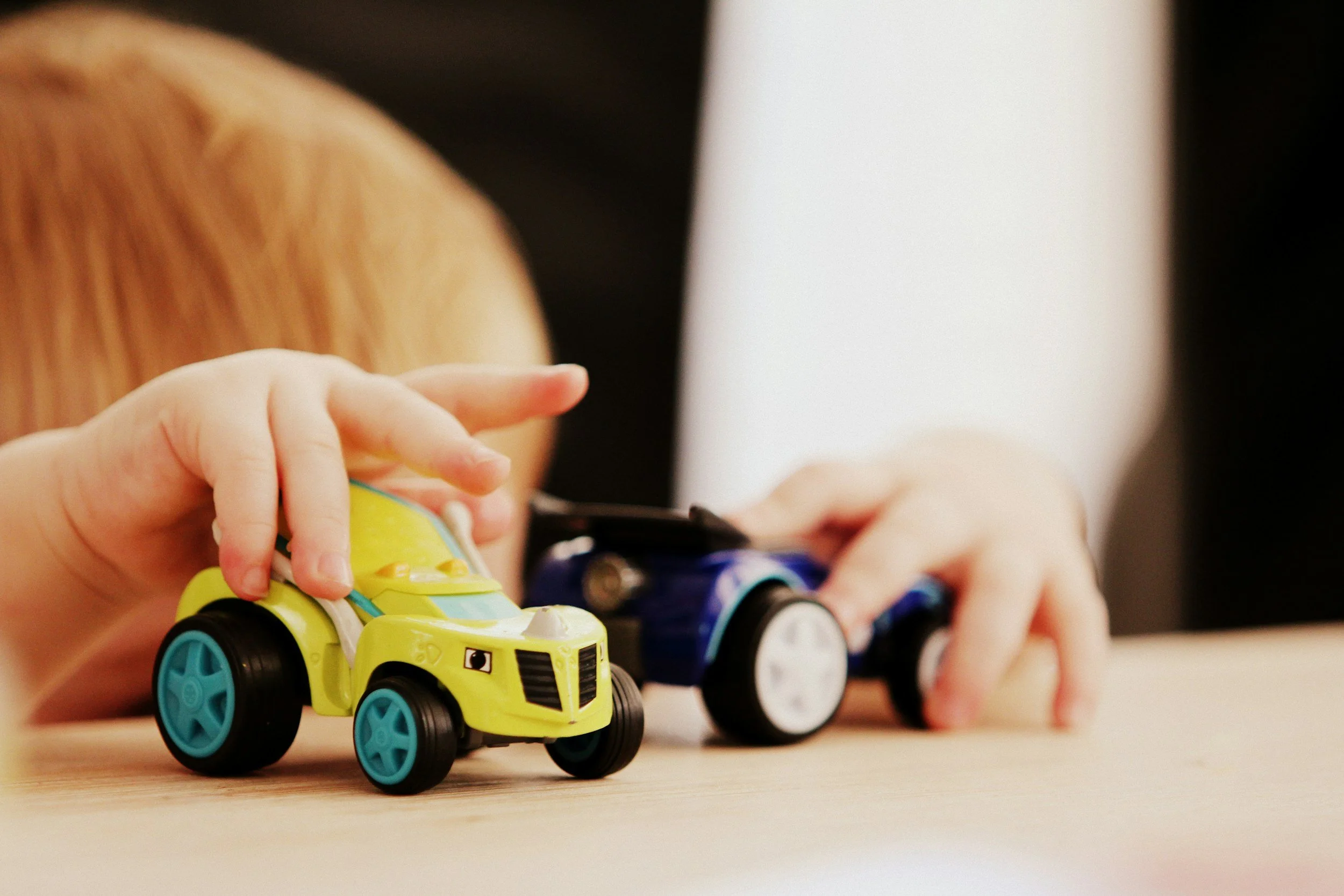
Sometimes that starts with toys.
Sometimes with a board game.
Sometimes with a sand tray.
Sometimes with a conversation.
And often, it is a combination of all of them.
At Heights Family Counseling, our child and teen therapists use developmentally appropriate approaches to help children feel comfortable, connected, and understood while working toward meaningful change.
Because therapy should not expect a child to communicate like an adult before they are ready.
It should meet them where they are and grow with them.